
Las Vegas is not always thought of as a cycling city, but the reality is that thousands of people ride bicycles throughout the Las Vegas Valley every day — for recreation, transportation, and sport. The city’s bike lane network has expanded significantly in recent years, and routes connecting neighborhoods, the Strip, and surrounding trails see consistent use. With that activity comes real risk. Drivers unfamiliar with local roads, distracted by phones or passengers, or simply unaware of their legal obligations to cyclists cause serious accidents with troubling frequency.
If you were injured while riding a bicycle in Las Vegas or Clark County, Nevada law provides meaningful protections. Here is what cyclists need to know about their rights and how injury claims work.
Cyclists Have the Same Rights as Drivers on Nevada Roads
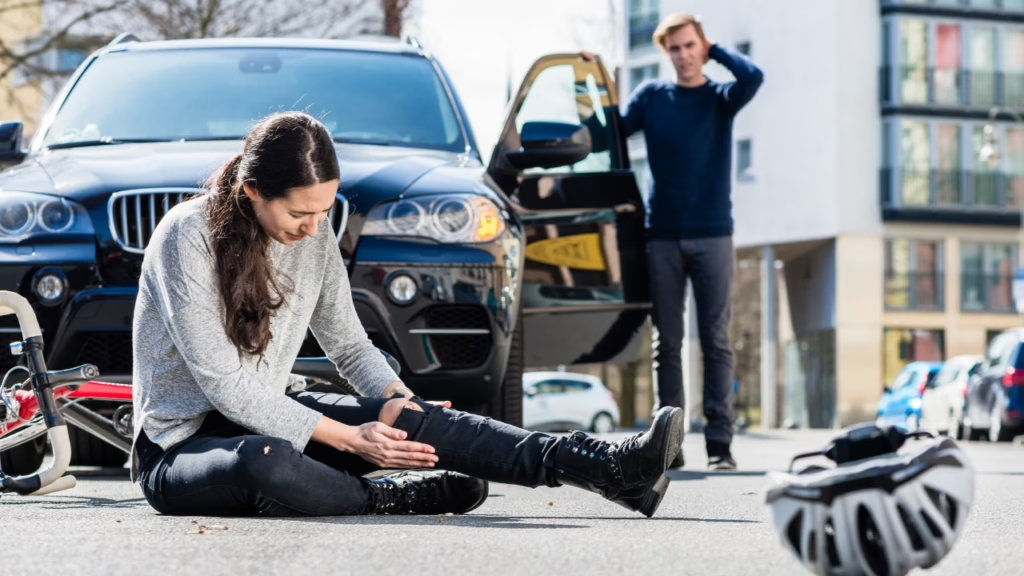
Under NRS 484B.763, every person riding a bicycle on a public roadway has the same rights and is subject to the same duties as the driver of a motor vehicle, with limited exceptions specific to bicycles. This means cyclists are entitled to use traffic lanes, have the right of way in the same situations a vehicle would, and are protected by the same traffic laws that govern all road users.
This is not a technicality. It is a foundational principle of Nevada traffic law, and it matters for injury claims because it means a driver who fails to yield, cuts off a cyclist, or fails to give adequate clearance when passing has violated the same legal duties they would owe to another vehicle. That violation is the basis for civil liability.
The Three-Foot Passing Rule: NRS 484B.270
One of the most important protections for Nevada cyclists is the safe passing requirement in NRS 484B.270. When a driver overtakes a cyclist traveling in the same direction, the law requires the following:
- On roads with more than one same-direction lane, the driver must move into the adjacent left lane when it is available and reasonably safe to do so.
- On roads with only a single same-direction lane, the driver must pass to the left with at least three feet of clearance between any part of the vehicle and the bicycle.
- The driver may not return to the right until they are safely clear of the cyclist.
NRS 484B.270 also prohibits a driver from intentionally interfering with a person lawfully riding a bicycle. A driver who violates the passing rule and causes a collision with a cyclist faces additional penalties beyond an ordinary traffic citation, and the statutory violation is powerful evidence of negligence in a civil injury claim.
A documented three-foot rule violation or a lane-change failure documented by dashcam footage or witness testimony is often the difference between a disputed liability case and a clear one. Securing this evidence quickly after a crash is essential.
Where Nevada Bicycle Accidents Happen Most Frequently
Based on the intersection conditions and road configurations throughout the Las Vegas Valley, the most common bicycle accident scenarios include:
- Drivers turning right across a bike lane without checking for cyclists, particularly at signalized intersections
- Dooring accidents in which a vehicle occupant opens a door into the path of a cyclist in a bike lane or adjacent to parked vehicles
- Drivers passing too closely or clipping cyclists on roads without dedicated bike lanes
- Intersection collisions where a driver fails to yield the right of way to a cyclist proceeding straight through
- Rear-end impacts from inattentive drivers, particularly in areas where cyclists share lanes with motor vehicle traffic
- Sideswipe accidents caused by drivers drifting into bike lanes or failing to maintain their lane
The Ride-Right Rule and Cyclist Responsibilities
Nevada law under NRS 484B.777 requires cyclists to ride as near to the right side of the roadway as practicable. The key word is practicable, not possible. The statute recognizes that riding at the far right is not always safe and explicitly does not require it when the cyclist is traveling at the speed of nearby traffic, when the lane is too narrow to safely share with a passing vehicle, when conditions such as road debris or a storm drain make the right edge hazardous, or when making a left turn.
This matters for injury claims because insurance companies and defense attorneys frequently argue that a cyclist who was not riding in the far right of the lane was at fault for a crash. Understanding the exceptions to the ride-right rule allows an attorney to rebut this argument with the specific conditions at the time of the crash.
Nevada law also permits cyclists to ride two abreast on roadways, but no more than two, unless on a path or lane designated for bicycle use. Riding three or more abreast on public roads violates Nevada law and would be relevant to a comparative fault analysis.
Helmet Laws in Nevada
Nevada does not have a statewide helmet requirement for adult cyclists. Riders under 18 are required to wear helmets in many local jurisdictions, but there is no statewide mandate for adults. The absence of a helmet in an adult cyclist’s crash does not automatically reduce their recovery, though defense attorneys sometimes attempt to introduce it as evidence of comparative negligence. Whether that argument succeeds depends on the facts of the injury and whether a helmet would have materially changed the outcome.
Nevada’s Comparative Negligence Rule and Bicycle Accident Claims
Nevada’s modified comparative negligence rule under NRS 41.141 applies in bicycle accident claims. Defense teams frequently argue that cyclists contributed to their own injuries by riding too far from the curb, failing to signal, proceeding through a red light, or failing to wear a helmet. As long as you are not more than 50% at fault for the crash, you can still recover damages, reduced by your fault percentage. The threshold matters significantly in bicycle cases because the fault attribution argument is one of the most commonly used tools for minimizing cyclist injury claims.
Evidence That Matters in Las Vegas Bicycle Accident Cases
Bicycle accident evidence is often time-sensitive. A driver who violates the three-foot rule may not receive a citation at the scene. Physical evidence of road position fades. Witness memories deteriorate. The following evidence sources are most useful:
- Dashcam footage from the at-fault vehicle or from other vehicles nearby
- Surveillance video from adjacent businesses, traffic cameras, or residential security systems
- The police report, including any citations issued and the officer’s observations about road position and speed
- Witness contact information gathered at the scene
- Photographs of the bicycle, the vehicle, the point of impact, road markings, and bike lane paint
- Medical records documenting the nature and mechanism of injuries
What Compensation Is Available After a Nevada Bicycle Accident?
Cyclists injured by negligent drivers in Nevada may recover all past and future medical expenses, lost wages during recovery, reduced future earning capacity for permanent injuries, cost of bicycle repair or replacement, pain and suffering, emotional distress, and loss of enjoyment of recreational and daily activities. Nevada imposes no cap on non-economic damages in personal injury cases. Cycling-related injuries can be extensive, and the value of these claims is often significantly underestimated in early settlement offers. See our case results for examples of what we’ve recovered for injury clients.
Talk to Marathon Law Group After a Bicycle Crash
We represent cyclists injured throughout the Las Vegas Valley, from the Strip to residential neighborhoods to recreational corridors near Red Rock and Lake Mead. We handle bicycle accident claims on a contingency fee basis, and we come to you if you are recovering from your injuries. Call us at (702) 522-1808, email mlg@marathonlawgroup.com, or contact us online for a free consultation.
This blog post is for general informational purposes only and does not constitute legal advice. Reading this content does not create an attorney-client relationship. Every case is different. Please consult a licensed Nevada attorney for advice specific to your situation. Prior results do not guarantee a similar outcome.