
Southern Nevada’s waterways, particularly Lake Mead and Lake Mohave along the Colorado River, draw millions of visitors each year. Boating, jet skiing, wakeboarding, kayaking, and swimming are popular activities throughout the warmer months, and the combination of recreational traffic, rental watercraft, inexperienced operators, and alcohol creates conditions for serious accidents.
Lake Mead has been called one of the most dangerous national parks in the United States, in part because of the frequency of boating injuries and drowning incidents on the lake. When those accidents are caused by someone else’s negligence, Nevada law provides a path to compensation. Here is what injury victims and their families need to know.
Nevada Boating Law and Operator Responsibilities
Nevada’s boating laws are codified primarily in NRS Chapter 488, which governs the operation of watercraft on Nevada waters including Lake Mead, Lake Mohave, and Lake Tahoe. Key operator obligations under Nevada law include:
- Operators must maintain a proper lookout and operate at a safe speed given the conditions, traffic, and visibility on the water.
- Every vessel must carry U.S. Coast Guard-approved life jackets for each person on board. Any child under 13 must wear a life jacket at all times while the vessel is underway.
Boating under the influence is illegal under NRS 488.410. Operating a vessel with a BAC of 0.08% or higher is a criminal offense. A BUI conviction is powerful evidence of negligence in a civil injury claim.
- Any person born after January 1, 1983 must have completed a boating safety education course to operate a motorized vessel in Nevada.
In the event of a collision, accident, or casualty resulting in injury, death, or property damage exceeding $2,000, the operator must file a report with the Nevada Department of Wildlife under NRS 488.550.
- Operators must yield the right of way under specific conditions and are responsible for the wake their vessel creates.
Federal Maritime Law and Lake Mead Claims
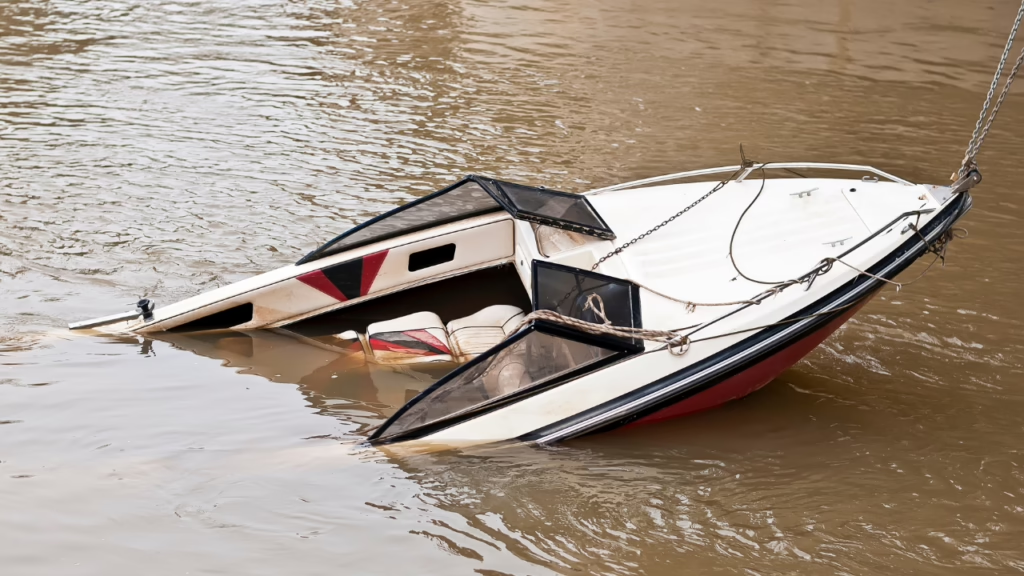
Lake Mead sits on the Nevada-Arizona border and is a navigable waterway of the United States. This means that boating accident claims arising on Lake Mead may be pursued under either Nevada state law or federal admiralty law, depending on the circumstances. Federal maritime law applies to all U.S. navigable waterways, and in some situations its rules on liability, damages, or procedural matters may be more favorable to an injured party than state law.
This jurisdictional duality is one of the features that distinguishes boating accident cases from standard land-based personal injury claims. An attorney experienced in both Nevada personal injury law and federal maritime principles can evaluate which framework best serves the injured party’s interests and where to file the claim accordingly.
Common Causes of Lake Mead Boating Accidents
The accident patterns we see in Lake Mead boating injury cases reflect the specific characteristics of recreational waterway traffic:
- Operator inattention and distracted boating, including phone use and failure to maintain a proper lookout
- Boating under the influence of alcohol or drugs, which is particularly common during holiday weekends
- Excessive speed in high-traffic coves, near swim areas, or in restricted zones
- Inexperienced operators, including rental boat and jet ski operators who have never operated a vessel before
- Failure to maintain proper equipment, including life jackets, navigation lights, and fire extinguishers
- Wake violations creating hazardous conditions for other vessels or swimmers
- Propeller strike injuries, often involving swimmers or people near a vessel who were not visible to the operator
- Capsizing and flooding incidents caused by overloading or poor weight distribution
Who Can Be Held Liable for a Boating Accident?
Depending on the facts of the accident, liability in a Nevada boating case may extend to several parties:
The boat operator. An operator who causes an accident through negligent operation bears primary liability for the resulting injuries.
The boat owner. In Nevada, a boat owner who permits another person to operate their vessel may be liable for that operator’s negligence, particularly if the owner knew or should have known the operator was inexperienced, impaired, or otherwise unfit to operate the vessel.
A rental company. Commercial rental operators owe a duty to ensure their watercraft is in safe mechanical condition and to screen renters for basic competency. Failure to maintain equipment or to deny a rental to a clearly impaired or incompetent renter can expose the company to liability.
A boat manufacturer. When a defective component — an engine, steering mechanism, or safety equipment — contributes to a boating accident, the manufacturer may be liable under Nevada product liability law.
The National Park Service. Lake Mead is managed by the National Park Service. Claims against federal agencies involve distinct procedures under the Federal Tort Claims Act and have shorter notice periods than standard civil claims.
Injuries in Boating Accidents
Boating accidents frequently produce severe injuries because of the forces involved and the aquatic environment. Common injuries include traumatic brain injuries from striking the vessel, dock, or water at speed; spinal cord injuries from impact; propeller lacerations, which can be catastrophic; drowning and near-drowning with associated brain damage from oxygen deprivation; hypothermia and dehydration complications; bone fractures from collisions or falls; and soft tissue injuries from rope burns, impacts, or falls.
Drowning and near-drowning cases also carry significant wrongful death implications. If a family member was killed in a Lake Mead boating accident caused by another party’s negligence, the family may have a wrongful death claim under NRS 41.085 in addition to any survival action under NRS 41.100.
Comparative Negligence in Nevada Boating Cases
Nevada’s modified comparative negligence rule under NRS 41.141 applies in boating accident claims. Defense teams in boating cases commonly argue that an injured swimmer was in a restricted area, that a passenger assumed the risk of the activity, or that the injured party contributed to the accident by operating their own vessel carelessly. As long as you are not more than 50% at fault, recovery is available, reduced by your fault percentage. The assumption of risk defense is limited to risks inherent in the activity — not risks created by another party’s negligence.
Evidence and Time Limitations
Boating accident cases have evidence challenges specific to the water environment. GPS data from the vessel, onboard cameras where present, Coast Guard or Nevada Department of Wildlife reports, weather and water condition records, and witness accounts from other boaters are the primary evidentiary building blocks. The Nevada Department of Wildlife investigates serious boating accidents and its reports are important documents in civil cases.
Nevada’s general two-year statute of limitations under NRS 11.190(4)(e) applies to most boating injury claims. Claims against the National Park Service or other federal entities require administrative notice within two years under the Federal Tort Claims Act. Missing these deadlines ends the right to compensation.
Talk to Marathon Law Group About a Boating Injury
We handle boating accident and watercraft injury claims from Lake Mead, Lake Mohave, and across Southern Nevada. We work on a contingency fee basis, and we come to you if you are recovering from your injuries and cannot make the trip to our office. Call us at (702) 522-1808, email mlg@marathonlawgroup.com, or contact us online for a free consultation.
This blog post is for general informational purposes only and does not constitute legal advice. Reading this content does not create an attorney-client relationship. Every case is different. Please consult a licensed Nevada attorney for advice specific to your situation. Prior results do not guarantee a similar outcome.