
Nevada has been in a sustained period of highway expansion and reconstruction, and the Las Vegas Valley sits at the center of it. The ongoing I-15 widening through North Las Vegas, the US-95 corridor projects, the 215 Beltway extensions, and numerous surface street reconstruction projects have placed millions of construction zone miles in front of Southern Nevada drivers. Work zones are among the most dangerous environments on Nevada roads, and when accidents happen in them, the legal landscape is more complex than a standard highway crash.
If you were injured in a construction zone accident in Las Vegas or Clark County, multiple parties may bear responsibility, and the evidence preservation timeline is urgent. Here is what you need to know.
Why Construction Zones Generate Serious Accidents
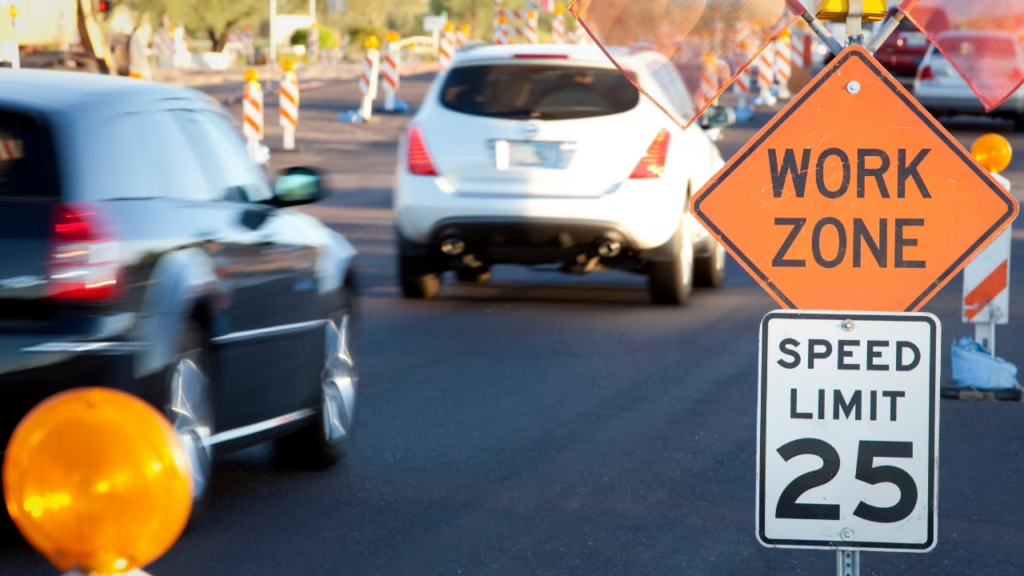
Construction zones create accident conditions that do not exist on open highway. Lane reductions force multiple lanes of high-speed traffic into narrower channels. Speed limit reductions create sudden differentials between drivers who comply and those who do not. Lane shifts require drivers to make navigational decisions at speed with reduced sight lines. Temporary surfaces, uneven pavement, and unmarked transitions create vehicle control hazards. And the presence of construction workers on or near the roadway means that a crash in a work zone often has more severe consequences than the same crash on an open highway.
Several specific patterns generate the highest volume of work zone injury claims in the Las Vegas area:
- Rear-end crashes caused by drivers who fail to slow down for lane reductions or who are following too closely when traffic ahead stops unexpectedly
- Sideswipe crashes in narrowed lanes where driver inattention causes vehicles to drift into adjacent lanes or into construction barriers
- Merge conflicts at points where lanes are reduced, particularly when drivers disregard early merge signs and attempt late merges at high speed
- Driver confusion at poorly marked or rapidly changing lane configurations, particularly in active construction zones where the layout changes frequently
- Truck and commercial vehicle crashes, where the stopping distance required by heavy vehicles is incompatible with sudden slowdowns (see our truck accident page for more on FMCSA regulatory violations that commonly arise in these cases)
- Crashes involving construction equipment entering or exiting the roadway
Nevada’s Enhanced Work Zone Penalties: NRS 484B.130
Nevada law recognizes that construction zones require heightened driver care and imposes enhanced penalties on drivers who violate traffic laws within them. Under NRS 484B.130, a driver who commits certain traffic violations including speeding within a properly marked work zone faces double the standard civil penalty for that violation.
This statutory enhancement matters for personal injury claims in two important ways. First, the existence of a documented traffic violation in a work zone is powerful evidence of negligence in a civil case. A speeding citation issued within a construction zone under NRS 484B.130 is not just a traffic matter — it is evidence that the driver violated a law designed to protect both the public and road workers in a high-risk environment, which is the foundation of a negligence per se claim. Second, the enhanced penalty reflects the legislature’s recognition that the standard of care in a work zone is higher than on open highway.
Who Can Be Liable in a Nevada Construction Zone Accident?
One of the distinguishing features of construction zone accident claims is that liability may extend well beyond the negligent driver. Multiple parties are potentially responsible depending on the specific cause of the crash:
The Negligent Driver
The most common defendant in a work zone crash is another driver who was speeding, distracted, following too closely, or otherwise failed to exercise the heightened care that construction zone conditions demand. Their traffic violation and its contribution to the crash are the starting points for a standard negligence claim.
The General Contractor
The contractor managing the construction project has legal responsibilities for maintaining a safe work zone. These include proper placement and maintenance of signage indicating the beginning and end of the work zone, proper channeling devices including cones, barriers, and delineators to guide traffic safely through the zone, adequate lighting for nighttime work zones, flagging operations that are conducted safely and in compliance with applicable traffic control standards, and protection of workers from the traffic hazard. When inadequate signage, improper channeling, or unsafe flagging operations contribute to a crash, the contractor may share liability alongside the at-fault driver.
The Nevada Department of Transportation
NDOT has oversight responsibility for state highway work zones and sets the standards for traffic control plans that contractors must follow. When a design defect in the traffic control plan itself contributes to a crash, a claim against NDOT may be appropriate. However, claims against NDOT are claims against a state agency, which triggers the notice and filing requirements of Nevada’s government tort claims process under NRS 41.031. The notice deadline for claims against state agencies can be as short as six months in some contexts. Missing this deadline can permanently bar a claim.
A Subcontractor
Large construction projects typically involve multiple subcontractors responsible for specific work scopes. A subcontractor responsible for lane marking, temporary surfacing, or equipment placement who performs that work negligently and creates a crash hazard may bear direct liability for resulting injuries.
Evidence in Construction Zone Accident Cases
Construction zone accidents benefit from a category of evidence not always available in standard highway crashes: the project record. Large NDOT projects generate extensive documentation including traffic control plans, daily inspection logs, contractor safety plans, and incident reports. These records can establish what the traffic control configuration was supposed to look like versus what drivers actually encountered. Obtaining this documentation through legal discovery or public records requests is an early priority in construction zone cases.
Video evidence is also significant. NDOT and contractors frequently use traffic monitoring cameras in active work zones, and some construction sites have security cameras covering the project area. This footage can be invaluable for reconstructing the crash sequence, but it is subject to retention schedules that may result in overwriting within days of an incident.
Comparative Negligence in Work Zone Cases
Nevada’s modified comparative negligence rule under NRS 41.141 applies to construction zone accident claims. Defense teams often argue that an injured driver was speeding, following too closely, or failed to observe warning signs. As long as the injured party is not more than 50% at fault, recovery remains available. A thorough reconstruction of the crash sequence, the road configuration, and the adequacy of signage is essential to countering overattributed fault in these cases.
What Damages Are Available?
Construction zone accident victims may recover all past and future medical expenses, lost wages, reduced future earning capacity, pain and suffering, emotional distress, and loss of enjoyment of life. Nevada generally does not cap compensatory damages in personal injury cases against private parties, such as a negligent driver or contractor. Claims against a state or local government agency like NDOT are different: damages in those claims are limited by statute under NRS 41.035. In cases involving egregious negligence, punitive damages under NRS 42.005 may be available where the conduct rises to the level of oppression, fraud, or malice.
Marathon Law Group: Las Vegas Construction Zone Accident Attorneys
We handle construction zone accident claims throughout the Las Vegas Valley, including I-15, US-95, the 215 Beltway, and the surrounding surface street corridors. We work on a contingency fee basis, advance all case costs, and come to you if you are unable to travel. Call us at (702) 522-1808, email mlg@marathonlawgroup.com, or contact us online for a free consultation.
This blog post is for general informational purposes only and does not constitute legal advice. Reading this content does not create an attorney-client relationship. Every case is different. Please consult a licensed Nevada attorney for advice specific to your situation. Prior results do not guarantee a similar outcome.